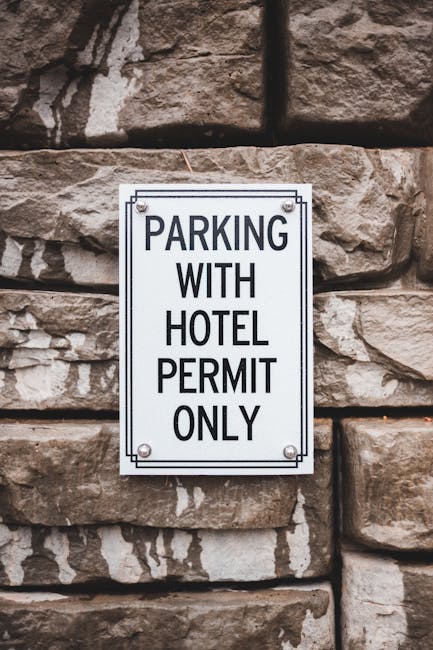
Why Hackney council parking permits matter for removals

Moving house or relocating a business in Hackney can look straightforward on paper. Then you hit the real-world bit: parking. Narrow roads, busy bays, suspended spaces, rush-hour pressure, neighbours who already seem to own every inch of kerb space. That is exactly why Hackney council parking permits matter for removals. They help the van or truck get close to the property, keep the move moving, and reduce the chance of awkward delays that ripple through the whole day.
If you have ever watched a removal team carry a sofa down three flights of stairs only to find the vehicle parked half a street away, you will know how quickly a small parking issue becomes a big one. In this guide, we will break down how council parking permissions affect removals, who needs them, what can go wrong, and how to plan properly so the move feels controlled rather than chaotic.
Why Hackney council parking permits matter for removals
Parking permissions are not just an admin box to tick. For removals, they shape whether the job can happen smoothly, safely and on time. A removal van needs a workable loading point, ideally close to the entrance, with enough space for repeated trips between the property and the vehicle. In dense parts of Hackney, that is not something you can assume. You often have resident bays, pay-and-display spaces, time-restricted loading areas, yellow lines, and streets where stopping even briefly can cause friction.
When a permit is in place, the crew can focus on the move itself rather than improvising around parking restrictions. That matters for time, yes, but also for care. The shorter the carrying distance, the lower the risk of knocks, dropped items, strained backs, and those slightly stomach-dropping moments when a mattress catches on a gatepost. Not fun. Nobody wants that.
It also matters because removals rarely run to a neat script. A landlord is late handing over keys. A lift is being used by neighbours. Rain starts just as the wardrobe is outside the door. Small delays are normal. Parking stress on top of that can push a manageable move into a messy one.
For many people, the permit is the difference between a calm start and a day spent watching the clock. If you are arranging a house removals service or organising a bigger commercial move, the parking plan is part of the move plan, not an afterthought.
Practical takeaway: In Hackney, parking access is often one of the biggest hidden variables in a removal. Get it wrong and the whole move can slow down. Get it right and the day feels a lot more predictable.
How Hackney council parking permits matter for removals works
In simple terms, the permit or parking arrangement gives the moving vehicle lawful access to stop where it needs to stop. The exact process can vary depending on the street, the type of bay, the time of day, and whether the move is for a home, flat, office or storage run. You usually need to think about where the vehicle will park, how long it will stay there, and whether any restrictions apply at that time.
For a typical removal, the planning process starts before moving day. Someone checks the address, the street layout, and the nearest legal loading options. If you are in a block of flats or on a busier road, this becomes even more important. A permit may need to be requested in advance, or the move may need to be scheduled around available loading windows. Truth be told, the earlier this is handled, the fewer awkward surprises appear later.
There is also a practical distinction between having a parking space available and having a suitable space for removals. They are not always the same thing. A small bay that is legal for a car may not work for a larger vehicle, or it may leave too much distance between the van and the front door. That extra 30 metres sounds trivial until you are carrying boxes, appliances and a sofa through a narrow pavement with pedestrians brushing past.
Removal teams often coordinate the move around the permit rather than the other way round. That means confirming the size of the vehicle, the likely loading time, the access route, and any local restrictions. If you are using man with van support for a smaller move, the parking need may be lighter, but it still matters. A compact vehicle does not magically solve street restrictions.
And no, the van driver cannot just "nip in for five minutes" everywhere. Councils tend not to be relaxed about that sort of thing.
Key benefits and practical advantages
The obvious benefit is legal parking access. But that is only the first layer. The real value is operational. Once the vehicle can stop where it needs to stop, the whole removal gets easier to manage. Below are the advantages people notice most.
- Shorter carrying distances: Furniture and boxes move faster when the vehicle is close to the door.
- Less physical strain: Crews and customers do fewer long lifts, which reduces fatigue over the day.
- Lower risk of damage: Shorter routes usually mean fewer opportunities for bumps, scrapes and awkward turns.
- Better timing: The schedule is easier to keep when the vehicle is not circling for parking.
- Less neighbour disruption: A planned loading stop is usually tidier than ad hoc double parking or repeated repositioning.
- Reduced stress: This is not minor. People feel calmer when the parking issue is sorted early.
There is a commercial angle too. Delays cost time, and time costs money. If a crew spends 20 minutes hunting for a legal space, or if a vehicle has to be moved repeatedly to avoid restrictions, the move slows down. That can affect all sorts of things: how many trips are needed, whether another job overlaps, and whether unpacking starts later than expected.
For flats, especially in tightly packed streets, permit planning often matters even more. A flat removals job can involve stairs, shared entrances, timed lift use and limited kerb space all at once. Parking access is the thread that holds those logistics together. Pull that thread, and everything gets a bit wobbly.
Who this is for and when it makes sense
In Hackney, parking permits or parking arrangements are relevant for more people than you might think. They are not only for big family house moves. They matter for smaller, quicker, and more specialised jobs too.
You are likely to need them if you are:
- moving from a terraced house on a narrow residential street
- leaving a flat in a busy block with limited roadside space
- relocating an office where loading access is tight
- moving large items such as a piano or multiple bulky furniture pieces
- using a van for same-day or short-notice removals
- arranging student removals where time is tight and parking is scarce
- combining removals with storage or furniture pick-up
For smaller jobs, people sometimes assume parking is not worth planning. But even a compact job can run into a permit issue if the only legal space is far from the front door or if bay restrictions change during the move window. If you are booking same-day removals, this becomes even more sensitive because you have less time to correct a parking mistake.
It also makes sense for landlords, letting agents and property managers who need to coordinate move-in or move-out days. They often see the same pattern: if parking is not handled early, the day gets noisy, delayed and a little bit frantic. Nobody enjoys that energy.
Step-by-step guidance
Here is a sensible, practical way to approach the parking side of a Hackney removal. It is not glamorous, but it works.
- Check the property type and street layout. Ask whether the vehicle can stop directly outside, nearby, or only at a designated loading point.
- Confirm the size of the vehicle. A van, removal truck or larger lorry may need different space from a small car bay.
- Review time restrictions. Some streets are easier in the morning, others are better after commuter traffic eases.
- Identify loading and unloading needs. If there are heavy items, you want the shortest possible carry.
- Book the parking arrangement or permit in advance. Leave enough time for approval, confirmation or alternative planning if needed.
- Share access details with the removal team. Tell them about gates, steps, loading entrances, concierge desks or one-way systems.
- Plan for contingency. If the first option fails, know where the next-best legal loading point is.
This is where good removals planning pays off. If you are also arranging packing and boxes, the parking strategy should sit alongside the packing schedule. Otherwise, you end up with boxes ready to go and nowhere efficient to load them. Bit annoying, that.
A helpful rule of thumb: the more awkward the access, the more important the parking plan becomes. If the move is simple and the street is open, it may feel like a small detail. If the building has narrow access, time limits, or busy traffic, it is one of the main pieces of the puzzle.
Expert tips for better results
In practice, the best parking plans are the ones that are specific, not vague. "We should be fine" is not a plan. It is a hope. And hope is lovely, but it does not reserve a loading bay.
- Measure the real carry distance. Stand at the likely parking point and walk the route to the front door. You will notice if the path is awkward, especially with furniture.
- Think about the first and last item. The easiest box is not the issue. It is the sofa, wardrobe, fridge or filing cabinet that exposes bad parking decisions.
- Keep the move window realistic. If the permit only works for a short slot, do not overfill the schedule.
- Have a simple communication chain. One person should know who is dealing with parking, who is checking access, and who is answering building questions.
- Use a vehicle that matches the job. A smaller van can be a better fit for tight roads than a larger truck, even if the bigger truck seems more efficient on paper.
- Watch for seasonal pressure. School drop-off times, weekend shopping traffic and rainy mornings can all change what "easy parking" actually means.
From experience, the quiet wins are the ones that save the day: a permit confirmed early, a loading bay rechecked the night before, a spare plan if one side of the street is blocked. Not exciting. Very effective.
If you are comparing support options, it may also help to look at broader removal services and decide whether you need a more flexible van-based solution or a larger vehicle with a planned loading setup. That choice should follow access, not just volume.
Common mistakes to avoid
Most parking problems during removals are avoidable. The mistake usually is not lack of effort. It is assumption. People assume the street will be clear. They assume the van can stop "just there". They assume someone else has already sorted it. And then, at 8:15 in the morning, everything becomes urgent.
- Leaving permits too late: A last-minute request can leave you with fewer options if the preferred space is unavailable.
- Forgetting about vehicle size: What works for a car or small hatchback may not work for a removal van.
- Ignoring loading restrictions: A legal space is not always a practical removal space.
- Not checking both ends of the move: You may need parking at the old address and the new one.
- Failing to tell the removal team about access problems: Steps, barriers, lifts and roadworks all matter.
- Assuming flats are easier because items are smaller: Smaller items still need repeated trips, and parking still matters.
One especially common issue is the "we can unload later" mindset. Sometimes later means a truck is circling, neighbours are waiting, and the move has lost its rhythm. Once the rhythm goes, everything feels more tiring. You feel it in your shoulders, honestly.
Tools, resources and recommendations
You do not need a complicated toolkit to manage parking for removals, but a few simple things make the process much easier.
- A moving-day access sheet: Keep the address, access notes, parking plan and contact names in one place.
- A measuring tape or quick distance check: Useful for judging whether the carry from the vehicle is sensible.
- Phone photos of the street and frontage: Handy when explaining access to a removals team.
- A labelled room plan: It speeds up unloading and reduces time spent with items outside the property.
- Boxes packed before the vehicle arrives: This sounds obvious, but it is where moves often go off-script.
For people moving homes, home moves are usually smoother when the packing and access plan are tied together. For business premises, the same logic applies to office removals, where time pressure and building access can be even more unforgiving.
It is also worth checking your own booking paperwork and move terms carefully. If you are arranging services through a provider, pages like pricing and quotes, terms and conditions, and insurance and safety can help you understand what is covered and how the move will be handled.
Law, compliance, standards and best practice
Parking for removals touches on local parking controls, road safety, and responsible vehicle use. It is always wise to treat the council's parking rules and any street restrictions as non-negotiable. Even if the move itself feels urgent, the vehicle still has to park lawfully and safely.
Best practice in the removals industry usually includes:
- checking local restrictions before the move
- making sure the parking arrangement suits the size of the removal vehicle
- keeping loading and unloading safe for workers and residents
- avoiding obstruction of traffic, crossings or access routes
- planning for building rules as well as street rules
This is where professional habits matter. A well-run move is not just about lifting and driving. It is also about respecting local conditions, protecting property, and reducing avoidable disruption. If your move involves bulky furniture, your team should also be thinking about handling, protection and route planning, which is why pages like furniture removals and moving truck are relevant from a planning point of view.
For commercial customers, compliance has another layer. Offices, shops and shared premises can have building management rules in addition to council parking controls. In those cases, a move is safest when the parking decision is made alongside access approval, security arrangements and timing. A little boring perhaps, but that is what keeps the day clean and orderly.
Options, methods, or comparison table
There is more than one way to handle parking for a removal. The best option depends on the building, the vehicle, and how much flexibility you have on the day.
| Approach | Best for | Strengths | Limitations |
|---|---|---|---|
| Pre-arranged council parking permission | Planned home or office moves | Predictable access, fewer delays, easier loading | Needs advance planning and accurate details |
| Short-stay legal loading space | Smaller moves or quick deliveries | Fast and often convenient if available | May not be close enough or available at the right time |
| Flexible van positioning nearby | Tight streets with limited access | Can work for smaller loads and compact vehicles | Longer carry distances, more physical effort |
| Full-size vehicle with planned bay access | Larger house or commercial removals | Efficient loading, fewer trips, better for bulky items | Needs more coordination and space |
If the move is simple, a compact vehicle and short loading stop may be enough. If the move is more complex, the safer choice is usually to plan parking as part of the service. For smaller jobs, man and van can be a practical option; for heavier or more demanding jobs, you may need something closer to removal truck hire.
Case study or real-world example
Imagine a flat move from a first-floor apartment on a busy Hackney street. The property is lovely, but the road is tight, the pavement is busy, and there is only limited bay space nearby. The customer has packed most of the belongings and booked a removal team for the morning. Good start.
Without a parking plan, the van might end up several doors away. That means each box, chair and wardrobe panel has to be carried further than expected. The team starts well, but by the middle of the job the pace drops. Someone has to pause while traffic passes. A neighbour needs out. Then a loading space opens up, closes again, and the whole thing gets a bit jagged.
Now picture the same move with parking sorted in advance. The vehicle arrives, parks legally in the planned spot, and the team gets into a clean rhythm. Boxes move out in a steady line. The sofa does not feel like a wrestling match. The customer can focus on checking rooms, rather than worrying whether the van is going to be ticketed or moved on.
That is the real point. Parking permits do not make removals glamorous. They make them workable. There is a difference.
We have seen the same pattern with student moves too, especially when people are shifting in and out around term dates. If you are moving from halls or a shared flat, student removals can feel simple on the surface, but parking still decides whether the day is easy or needlessly tiring.
Practical checklist
Use this quick checklist before moving day. It is the sort of list that saves you from the 7 a.m. panic text.
- Confirm the exact moving address.
- Check whether parking is needed at one end or both ends.
- Note the vehicle size and whether it needs a loading bay.
- Review street restrictions, bay times and any local no-stopping rules.
- Tell the removal team about steps, lifts, gates and access codes.
- Make sure large furniture is ready to go first.
- Pack fragile items securely before the vehicle arrives.
- Keep a contact number handy for move-day coordination.
- Have a fallback parking option in mind.
- Check the weather, because a wet carry is slower and clumsier.
If you are also arranging temporary overflow space, storage can take pressure off the loading process and reduce the number of items that need to move in one go. That can make parking planning simpler too.
Conclusion
Why Hackney council parking permits matter for removals comes down to one simple truth: the move is only as smooth as the access allows. In a borough where roads can be narrow, parking can be restricted, and loading space is often limited, permits and parking arrangements are not a side issue. They are central to the job.
When parking is planned properly, everything feels more controlled. The crew can work safely. Furniture moves faster. Delays shrink. The whole day becomes less like a scramble and more like a sequence you can trust. That matters whether you are moving a flat, a family home, a shop, or an office.
Get a free quote today and see how much you can save.
And if you are still at the "where do I even start?" stage, start with parking. It sounds small. It really isn't. Sort that first, and the rest of the move tends to breathe a little easier.
Frequently Asked Questions
Do I always need a parking permit for removals in Hackney?
Not always, but you do need a lawful and practical place for the removal vehicle to stop. Sometimes that means a permit, sometimes a loading bay, and sometimes a carefully timed space. The key is whether the vehicle can park close enough to keep the move efficient and compliant.
Why does parking matter so much for a house move?
Because the parking position affects walking distance, carrying effort, timing and safety. If the van is far away, every item takes longer to move. That adds fatigue and can increase the risk of damage or delay.
Can a small van skip the parking planning?
Usually no. A smaller van is easier to place, but it still needs a legal stopping point. Tight streets and controlled parking areas can still cause issues even for compact vehicles.
What happens if the parking space is too far from the property?
The move usually takes longer and becomes physically harder. Crews may need more trips, and bulky items become more awkward to carry. It is one of those problems that looks minor until you are halfway through the day.
Should I arrange parking at both the old and new address?
Yes, if both ends need vehicle access. A smooth removal depends on the whole route, not just the first pickup point. People often forget the arrival side, and then the unload becomes the messy bit.
Is parking planning more important for flats than houses?
Often, yes. Flats can involve shared entrances, stairs, lifts and more restricted street access. That does not mean houses are easy, though. Some terraced streets are just as challenging.
How far in advance should I think about parking?
As early as possible. If the move is simple, you may need only a basic check. If the street is busy or access is tight, sort it well before moving day so there is room to adapt if plans change.
Does parking affect removal costs?
Indirectly, yes. Delays, longer carry distances and extra time can affect the overall efficiency of the move. A well-planned parking setup often helps keep the job simpler and more predictable.
What if my building has a concierge or loading rules?
Then those rules should be treated as part of the move plan. Building access instructions, time slots and parking controls all need to work together. It is best to share them with the removals team early.
Are same-day moves harder to manage with parking restrictions?
They can be, because there is less time to make corrections. If you are booking a fast turnaround, parking and access details become even more important. A same-day move with no parking plan can get stressful very quickly.
What should I tell the removal team before move day?
Tell them about the street layout, parking restrictions, vehicle access, steps, lifts, gates, and any time limits. The more accurate the access picture, the better they can plan the vehicle and the loading sequence.
Can storage help if parking is tight?
Yes, it can. If you move fewer items in one go, the loading process becomes simpler and the parking pressure eases. That can be especially useful if you are dealing with a difficult street or a busy moving date.